My story
Bringing structure
to the messy part
I’m Cem Kurtaraner, a senior product designer with around 20 years in the industry, currently designing complex B2B SaaS workflows at Once For All.

Most of my work sits where products become complicated: multiple user roles, business rules, operational constraints, compliance requirements, automation, and teams trying to make good decisions with imperfect information.
That is the kind of work I enjoy.
The system behind the screen
I’ve learned that the hard part of product design is often not the screen itself. It is the system behind it.
Before I know what an interface should be, I need to answer five things. Most projects start out unable to answer any of them.
- 01Who needs to do what
- 02Where the decision points are
- 03What information is missing
- 04What can be automated
- 05Where people still need control
I like bringing structure to that mess.
My work usually starts before the interface is obvious. I map journeys, unpack workflows and clarify edge cases, then design the experience in enough detail that the idea survives real delivery.
How the work travels
Across very different products the shape of the work stays much the same: a problem nobody can describe consistently becomes something a team can build with confidence.
-
01
Ambiguity
Roles, rules and constraints, all described differently by everyone in the room.
-
02
Structure
The moving parts get names and the shape of the system becomes visible.
-
03
Direction
The team can see the problem well enough to choose. Trade-offs become explicit.
-
04
Delivery
States, permissions and the awkward cases, settled before build.
Product clarity, not just visual clarity
The clarity I care about is not only visual. It is product clarity: clear responsibilities, clear next steps, clear states, clear trade-offs, and clear reasons for why something works the way it does.
I’m drawn to product areas where design has to mediate between complexity and confidence. Compliance tools, supplier workflows, verification systems, dashboards, AI-assisted experiences and operational products all share that quality. They have to help people understand what is happening, trust it, and make the next decision with less friction.
Working with teams
The best design work, for me, happens when the conversation moves from scattered opinions to shared understanding. When a complicated flow becomes something people can reason about, and the details line up with the strategy.
That is the kind of designer I try to be: someone who can zoom out enough to frame the problem, zoom in enough to shape the details, and stay close enough to the team to help the work become real.
What that looks like in practice
Pieces of the middle of the work, where most of the thinking happens and very little is a finished screen.
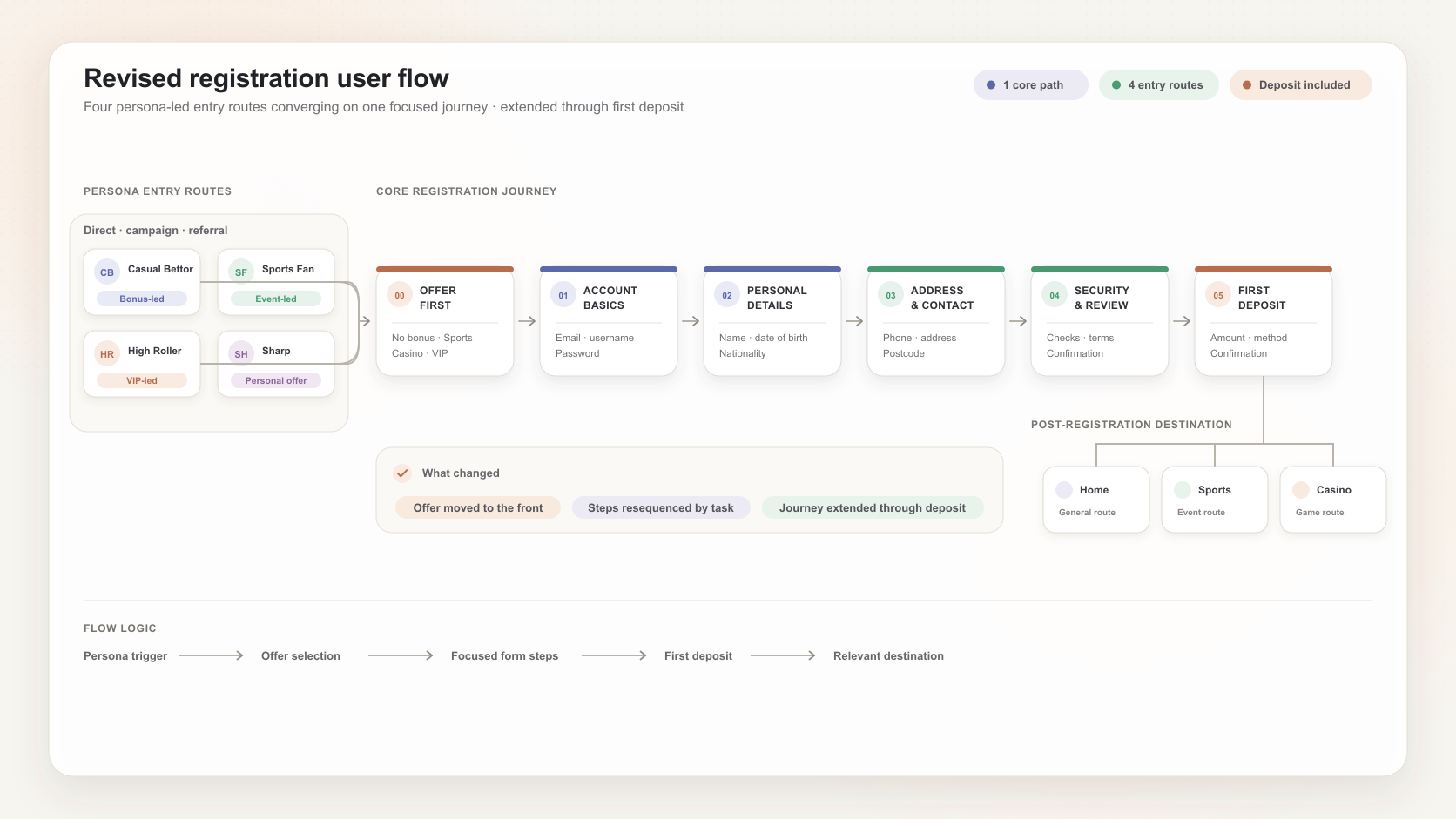
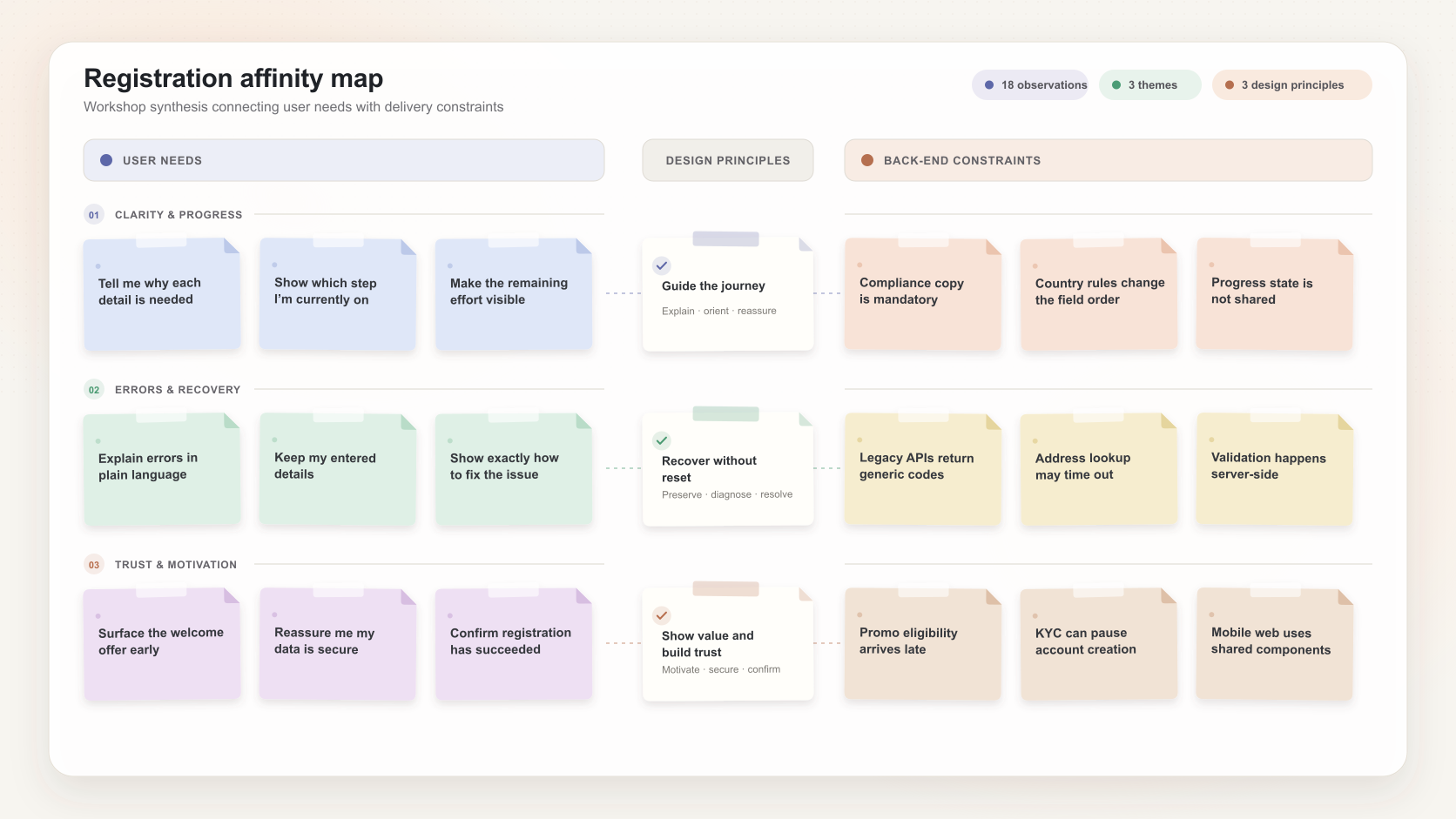
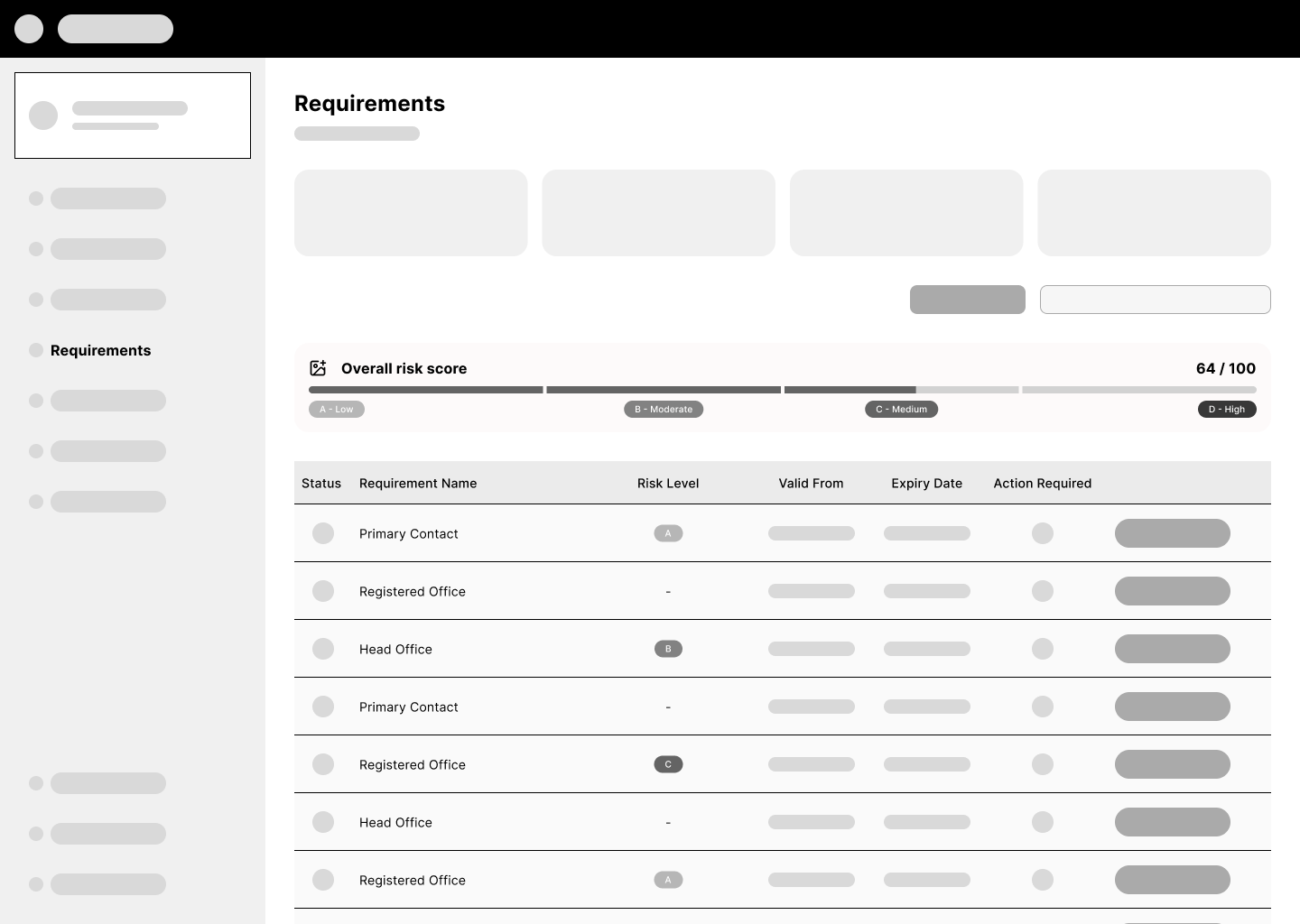
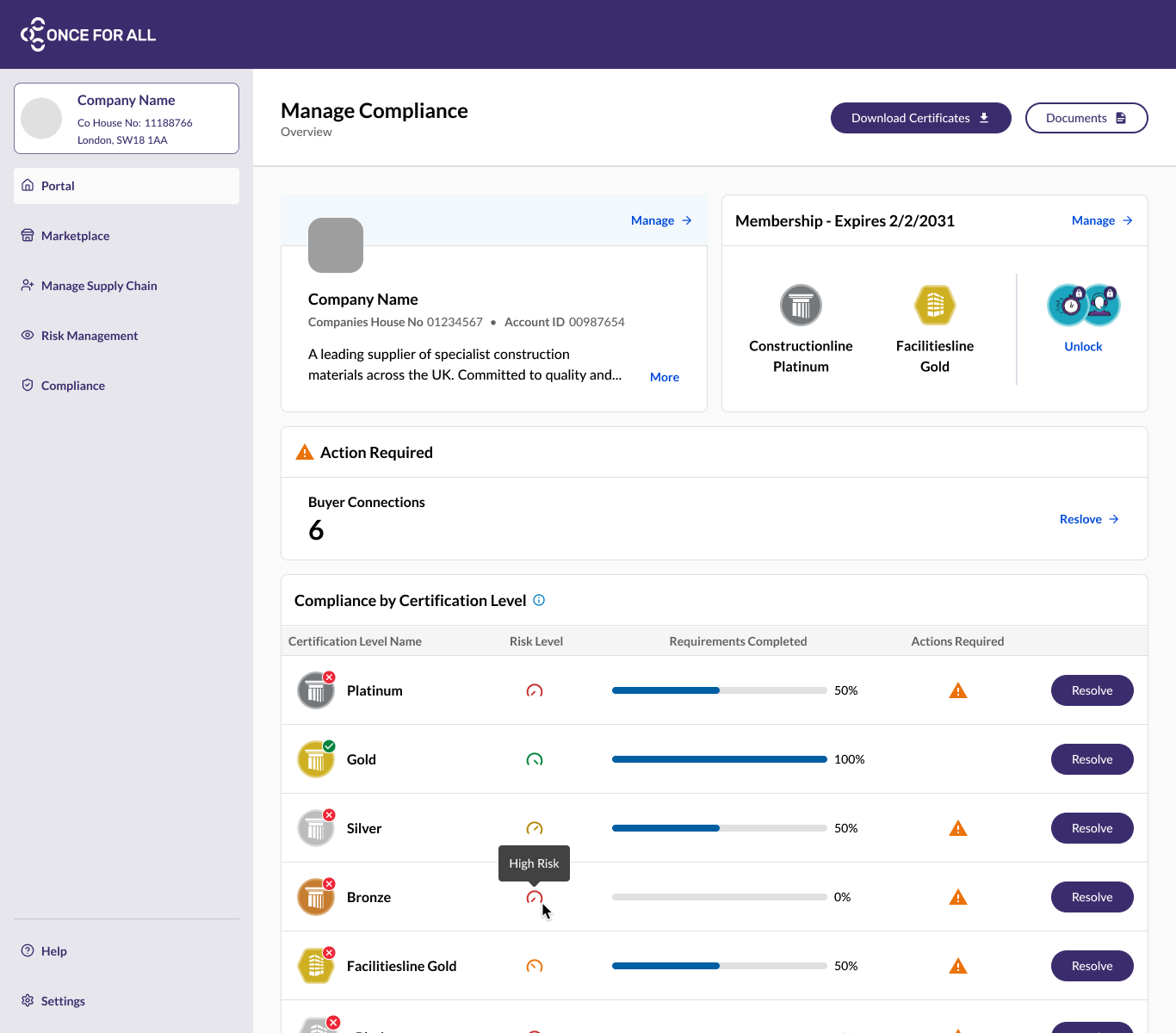
The case studies are the same story told in specifics. Each one starts in the middle of a real mess and shows what changed once the system behind the screen was clear.